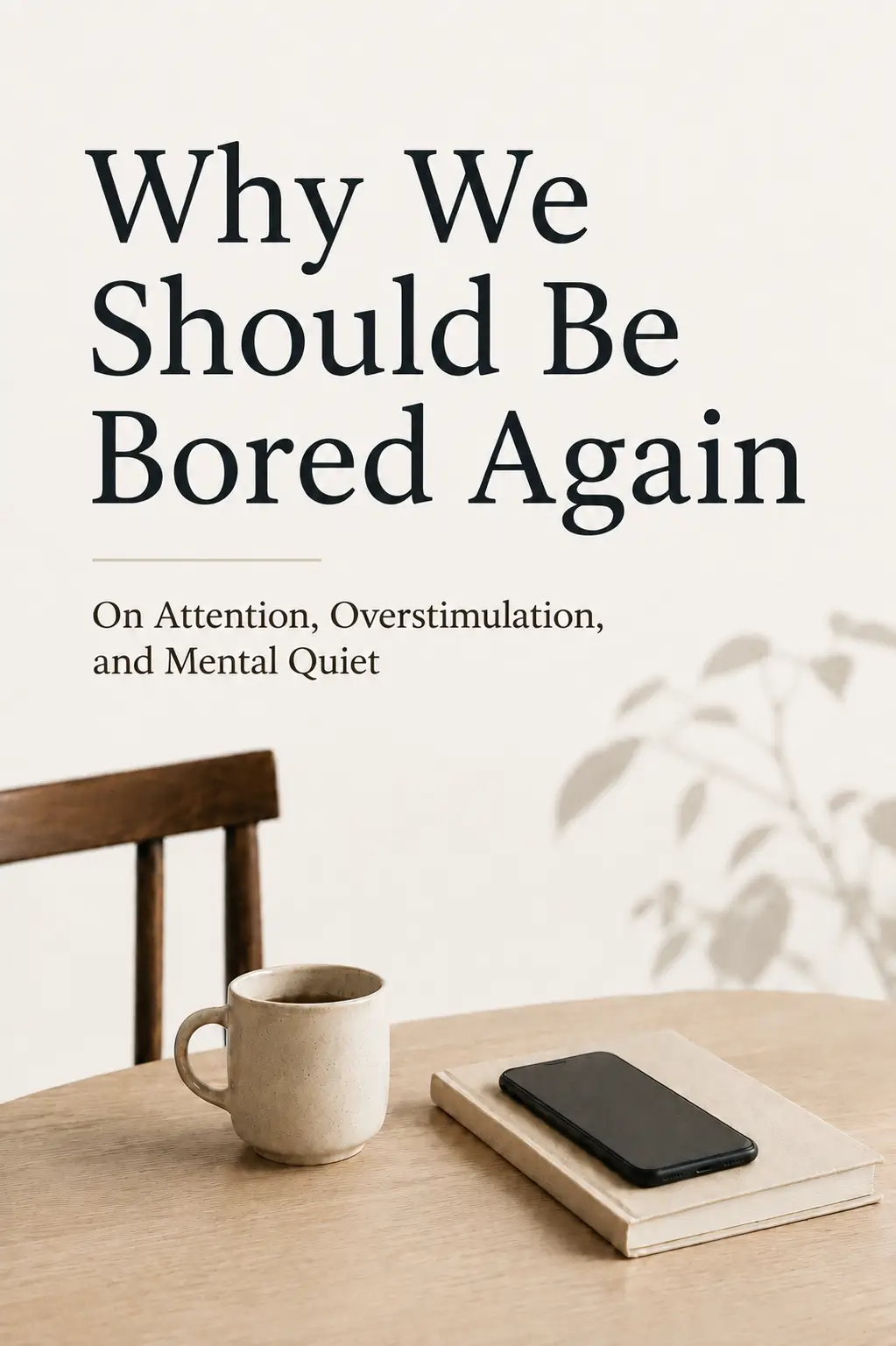
Why We Should Be Bored Again | A Digital Detox Book
On Attention, Overstimulation, and Mental Quiet
 Get the book
Secure checkout via PayPal
Get the book
Secure checkout via PayPal
At 11:48 p.m., Aisha was standing in her kitchen, eating cereal directly from the box. The apartment was quiet except for the soft hum of the refrigerator and the sound of short videos flickering from her phone. — from the opening pages
Why We Should Be Bored Again
You pick up your phone for one minute.
A video. Then another. A message. A notification. A quick look at social media. Suddenly, twenty minutes are gone—and you barely remember what you saw.
Maybe you have experienced the stranger part, too: putting your phone down and realizing you do not know what to do with the silence.
We have become so used to filling every spare moment that waiting can feel uncomfortable, boredom can feel like a problem, and being alone with our thoughts can feel almost unfamiliar.
Why We Should Be Bored Again is a thoughtful digital detox book about what happens when our attention is constantly pulled toward screens, notifications, and endless content—and what we may regain when we stop reaching for our phones every time there is nothing to do.
This is not a strict phone detox book that asks you to disappear from the internet overnight. It is an invitation to notice what constant stimulation has changed in your everyday life.
What If Boredom Was Never the Problem?
You pick up your phone for one minute.
At 11:48 p.m., Aisha was standing in her kitchen, eating cereal directly from the box.
The apartment was quiet except for the soft hum of the refrigerator and the sound of short videos flickering from her phone.
Nothing was wrong.
And yet, she could not seem to put the phone down.
That small moment captures something many of us recognize. We reach for our phones while waiting for coffee, sitting on the train, standing in line, eating dinner, or lying awake in bed. We fill the gaps before we even notice they were there.
But those gaps used to give our minds somewhere to wander.
This book asks a simple question:
What have we lost by never allowing ourselves to be bored?
A Different Kind of Digital Detox Book
There are plenty of books about digital detox that tell you to set limits, delete apps, turn off notifications, or spend less time online.
Those ideas can be useful.
But Why We Should Be Bored Again takes a different approach.
Instead of treating your phone as the enemy, the book asks you to look at your relationship with attention.
Why does one more video become ten?
Why does a quiet room suddenly feel uncomfortable?
Why can reading a few pages feel harder than scrolling through hundreds of posts?
Why do we feel the need to know what is happening even when nothing happening online actually matters to us?
And what might happen if we stopped trying to fill every empty moment?
Who this is for
- The overstimulated Anyone who feels mentally full by 9pm and can't quite say why.
- The chronic scroller People who've noticed the pattern and want to understand it, not just white-knuckle through it.
- The reflective reader Anyone who prefers a book that thinks alongside them over one that lectures.
Get the book